
Asphalt surfaces are a major investment for homeowners, property managers, and business owners alike. Whether it’s a residential driveway or a commercial parking lot, asphalt takes a daily beating from traffic, weather, chemicals, and time. Without proper maintenance, even the best-installed asphalt can deteriorate faster than expected, leading to costly repairs or full replacement.
That’s where sealcoating comes in. Sealcoating is one of the most effective and affordable ways to protect asphalt, extend its lifespan, and maintain its visual appeal. More importantly, it delivers long-term value by preventing damage before it becomes expensive.
In this guide, we’ll break down the real benefits of asphalt sealcoating, explain how it works, and show why regular sealcoating is a smart investment for preserving both asphalt performance and property value.
What Is Asphalt Sealcoating?
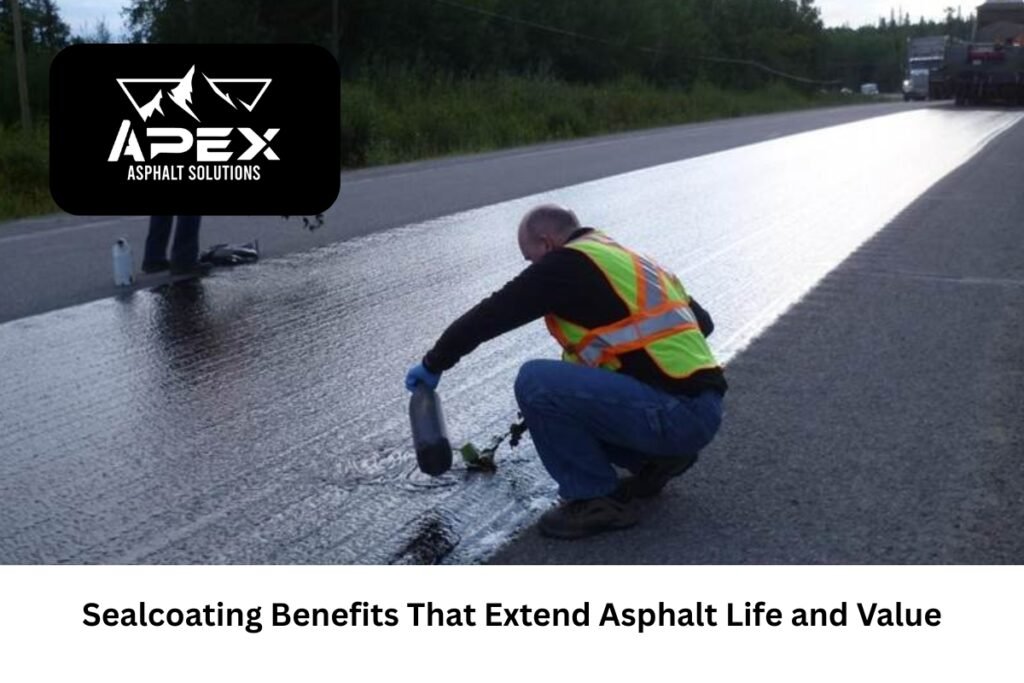
Asphalt sealcoating is the process of applying a protective liquid coating over an asphalt surface. Once cured, this coating forms a durable barrier that shields asphalt from external elements such as sunlight, water, oil spills, and oxidation.
Sealcoating does not repair structural damage, but it plays a critical role in preventing deterioration. When used as part of a regular asphalt maintenance plan, sealcoating helps preserve flexibility, strength, and appearance while slowing down the aging process of asphalt pavement.
How Sealcoating Extends Asphalt Lifespan
One of the most important sealcoating benefits is its ability to significantly extend the life of asphalt surfaces.
Prevents Oxidation and Drying
Over time, exposure to oxygen and UV rays causes asphalt binders to dry out and become brittle. As flexibility decreases, cracks begin to form. Sealcoating blocks oxygen and sunlight, slowing oxidation and helping asphalt remain flexible for longer.
Reduces Surface Wear
Traffic friction gradually erodes asphalt surfaces. Sealcoating adds a sacrificial layer that absorbs wear instead of the asphalt itself, preserving the integrity of the pavement beneath.
By reducing these forms of damage, sealcoating can extend the usable life of asphalt by many years when applied consistently.
Protection Against Water and Weather Damage
Water is one of asphalt’s biggest enemies. Even small amounts of moisture can penetrate cracks and weaken the base layers of pavement.
Blocks Moisture Penetration
Sealcoating fills surface voids and seals small imperfections, preventing water from seeping into the asphalt structure. This is especially important in areas exposed to heavy rain or freeze-thaw cycles.
Minimizes Freeze-Thaw Damage
When water freezes inside asphalt cracks, it expands and widens them. Sealcoating reduces water entry, lowering the risk of cracking, potholes, and structural failure during colder seasons.
Resistance to Oil, Chemicals, and Automotive Fluids
Driveways and parking lots are constantly exposed to oil leaks, gasoline spills, antifreeze, and other automotive fluids. These substances soften asphalt binders and accelerate surface breakdown.
Sealcoating creates a chemical-resistant layer that:
- Prevents oil penetration
- Makes spills easier to clean
- Reduces permanent staining
- Preserves surface strength
This is especially valuable for commercial properties where traffic volume and exposure are higher.
Improved Appearance and Curb Appeal
Beyond protection, sealcoating dramatically improves how asphalt looks.
Restores Rich Black Finish
Over time, asphalt fades to gray due to oxidation. Sealcoating restores a deep black color that makes pavement look newer and well-maintained.
Enhances Property Image
For businesses, a clean and polished parking lot sends a strong first impression. For homeowners, it boosts curb appeal and complements the overall appearance of the property.
Visual appeal plays a bigger role in property value than many realize — and sealcoating delivers that benefit instantly.
Increased Safety for Drivers and Pedestrians
Worn asphalt surfaces can become slick or uneven, creating safety hazards.
Sealcoating helps improve safety by:
- Increasing surface uniformity
- Improving traction
- Enhancing visibility of line striping and markings
When paired with professional line striping, sealcoating supports safer traffic flow and pedestrian movement.
Reduced Long-Term Maintenance and Repair Costs
Perhaps the most compelling sealcoating benefit is cost savings over time.
Prevents Expensive Repairs
Unsealed asphalt is far more likely to develop large cracks, potholes, and structural damage that require patching or resurfacing. Sealcoating minimizes these risks.
Delays Costly Replacement
Replacing asphalt is expensive. Sealcoating extends pavement life, allowing property owners to delay major resurfacing or reconstruction projects by several years.
In simple terms: regular sealcoating costs far less than neglect.
How Sealcoating Adds Real Property Value
Well-maintained asphalt is a visible asset. Properties with smooth, dark, crack-free pavement appear more professional and better cared for.
Sealcoating:
- Improves resale value
- Increases tenant satisfaction
- Supports positive business perception
- Demonstrates proactive maintenance
For commercial properties, this can directly influence leasing decisions and customer trust.
Best Timing and Frequency for Sealcoating
Applying sealcoating at the right time is just as important as applying it at all.
When to Sealcoat
- New asphalt: after curing (usually 6–12 months)
- Existing asphalt: when surface is structurally sound with minimal cracking
How Often to Sealcoat
Most asphalt surfaces benefit from sealcoating every 2–3 years, depending on traffic levels, weather exposure, and surface condition.
Professional assessment ensures sealcoating is applied at optimal intervals for maximum benefit.
Why Professional Sealcoating Matters
While DIY products exist, professional sealcoating delivers superior results.
Professional contractors:
- Use commercial-grade materials
- Prepare surfaces properly (cleaning, crack filling)
- Apply even, long-lasting coatings
- Ensure correct curing conditions
Proper preparation and application are essential for sealcoating to perform as intended.
Conclusion:
Sealcoating is not just a cosmetic upgrade—it’s a strategic investment in asphalt longevity, performance, and value. By protecting against weather, chemicals, traffic wear, and oxidation, sealcoating extends pavement life while reducing long-term maintenance costs.
Whether you manage a commercial property or maintain a residential driveway, regular sealcoating is one of the most effective ways to protect your asphalt and your budget.
FAQs
Ans: Sealcoating protects asphalt from UV rays, water, oil spills, and oxidation while extending pavement life, improving appearance, and reducing long-term repair costs.
Ans: Most asphalt surfaces should be sealcoated every 2–3 years, depending on traffic levels and environmental exposure.
Ans: Yes. Sealcoating slows deterioration and can significantly extend the usable life of asphalt when combined with routine maintenance.
Ans: Sealcoating is far more affordable than major repairs or full replacement, making it a cost-effective long-term investment.
Ans: Sealcoating does not repair structural damage. Cracks and potholes should be repaired before sealcoating for best results.