
At first glance, small cracks in asphalt may not seem like a big issue. Many property owners delay repairs, assuming cracks are only cosmetic or harmless. However, those small openings are often the starting point of serious asphalt failure, leading to potholes, base damage, drainage issues, and costly reconstruction.
Crack filling is one of the most effective and affordable asphalt maintenance solutions available today. When performed correctly and at the right time, crack filling prevents moisture infiltration, slows pavement deterioration, and protects your asphalt investment from premature failure.
In this guide, we’ll explain what asphalt crack filling really is, why cracks should never be ignored, and how proper crack-filling solutions help you avoid costly asphalt damage in the long run.
What Is Asphalt Crack Filling?
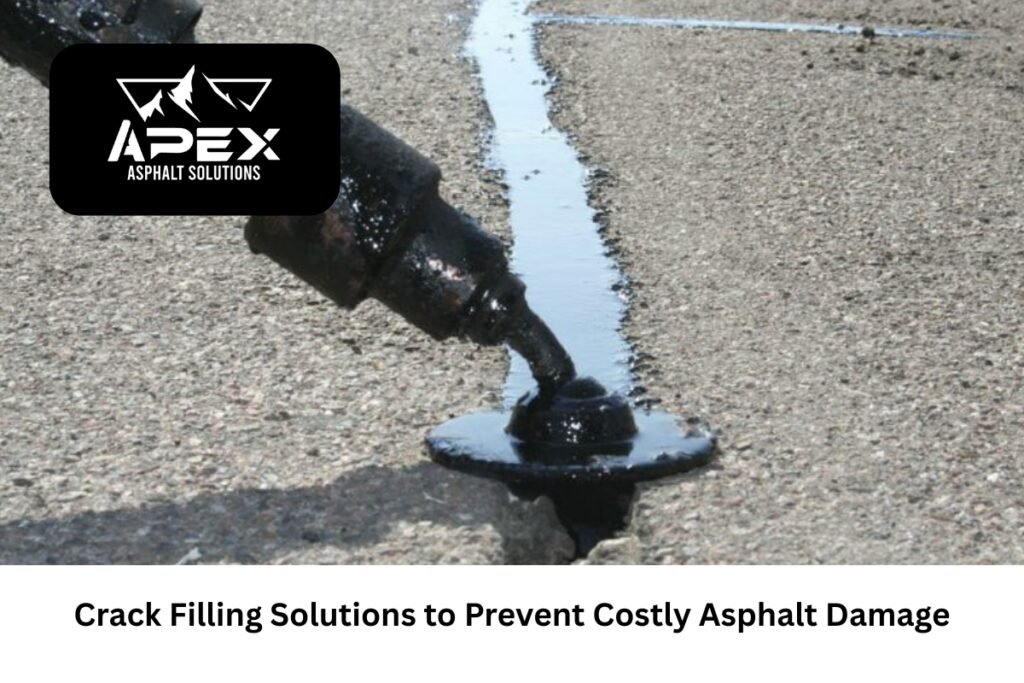
Asphalt crack filling is a preventive maintenance process used to fill non-moving or minimally moving cracks in asphalt pavement. The goal is to block water, debris, and chemicals from entering the pavement structure and weakening the base beneath the surface.
Crack filling typically uses specialized asphalt-based or rubberized materials that adhere to the crack walls and harden to create a protective seal. Unlike surface coatings, crack filling addresses the most vulnerable entry points where deterioration begins.
Many competitors blur the difference between crack filling and crack sealing. Crack filling focuses on non-working cracks—those that experience little movement—making it ideal for early-stage damage prevention.
Why Asphalt Cracks Lead to Expensive Damage
Ignoring cracks is one of the most common and costly asphalt maintenance mistakes.
Water Infiltration Is the Biggest Threat
Once it cracks open, water seeps into the pavement and reaches the base layers. Over time, this moisture:
- Weakens the sub-base
- Causes erosion and settlement
- Accelerates cracking and pothole formation
During freeze-thaw cycles, trapped water expands, widening cracks and accelerating damage.
Small Cracks Become Structural Failures
What starts as a hairline crack can eventually lead to:
- Alligator cracking
- Potholes
- Surface collapse
- Full asphalt replacement
Crack filling interrupts this chain reaction before repairs become expensive.
How Crack Filling Solutions Prevent Costly Asphalt Damage
Crack filling isn’t just about filling gaps—it’s about protecting the entire pavement system.
Blocks Moisture Before It Reaches the Base
By sealing off cracks early, crack filling prevents water from penetrating the foundation layers. This preserves load-bearing strength and prevents surface deformation.
Slows Crack Expansion
Filled cracks are less likely to widen or spread. Crack filling stabilizes existing cracks and reduces stress on surrounding pavement.
Preserves Pavement Flexibility
Crack fillers maintain elasticity, allowing asphalt to expand and contract without further damage, especially during temperature changes.
Key Benefits of Asphalt Crack Filling
Extends Asphalt Lifespan
Routine crack filling can add several years to the life of asphalt pavement by stopping deterioration at its earliest stage.
Reduces Long-Term Repair Costs
Crack filling costs far less than patching, resurfacing, or full reconstruction. Preventive maintenance always delivers a higher return on investment.
Improves Safety
Unfilled cracks create trip hazards for pedestrians and can damage vehicle tires. Crack filling creates smoother, safer surfaces.
Enhances Appearance
Sealed cracks improve the visual condition of driveways and parking lots, supporting a clean, professional appearance.
Crack Filling vs Crack Sealing: Know the Difference
One major mistake competitors make is treating crack filling and crack sealing as interchangeable. They are not.
Crack Filling
- Used for non-working cracks
- Best for cracks with minimal movement
- Uses asphalt-based or rubberized fillers
- Ideal for preventive maintenance
Crack Sealing
- Used for working cracks with movement
- Uses hot-applied rubber sealants
- Designed to expand and contract
Choosing the wrong method reduces effectiveness and shortens repair lifespan. Professional assessment ensures the correct solution is applied.
Types of Cracks That Require Filling
Not all cracks are the same. Crack filling is best suited for:
- Longitudinal cracks
- Transverse cracks with minimal movement
- Block cracking in the early stages.
- Shrinkage cracks
Identifying crack type early prevents improper treatment and wasted maintenance budgets.
When Should Asphalt Cracks Be Filled?
Timing is critical for successful crack filling.
Best Time of Year
Spring and fall are ideal because moderate temperatures allow fillers to cure properly and bond effectively.
How Often Is Crack Filling Needed
Crack filling should be performed:
- As soon as cracks appear
- Before sealcoating
- As part of routine asphalt inspections
Delaying crack filling allows damage to progress rapidly.
Professional Crack Filling vs DIY Repairs
While DIY crack-filling products are available, professional solutions deliver superior results.
DIY Limitations
- Inconsistent material quality
- Poor crack cleaning
- Shorter lifespan
- Higher failure rates
Professional Advantages
- Proper crack routing and cleaning
- Commercial-grade materials
- Correct application depth and finish
- Longer-lasting protection
Professional crack filling delivers better performance and greater long-term savings.
Step-by-Step Crack Filling Process
Effective crack filling follows a proven process:
- Inspection and Assessment
Identify crack type, width, and severity. - Surface Preparation
Remove debris, vegetation, dirt, and moisture. - Crack Cleaning
Use compressed air or mechanical cleaning to ensure adhesion. - Material Application
Apply the appropriate crack filler evenly and to the correct depth. - Finishing and Curing
Smooth surface and allow proper curing time.
Skipping steps or rushing the process reduces effectiveness and durability.
Crack Filling as Part of a Complete Asphalt Maintenance Plan
Crack filling works best when combined with other services:
- Sealcoating for surface protection
- Patching for damaged areas
- Line striping after repairs
Together, these services extend pavement life and maximize value.
Conclusion:
Crack-filling solutions play a vital role in preventing costly asphalt damage. By addressing cracks early, property owners protect their pavement from water infiltration, structural failure, and expensive repairs.
Rather than reacting to damage after it worsens, proactive crack filling preserves asphalt integrity, improves safety, and saves money over time. It is one of the smartest maintenance decisions you can make for your driveway or parking lot.
FAQs:
Ans: Crack filling prevents water, debris, and chemicals from entering asphalt cracks and causing structural damage.
Ans: Yes. Early crack filling stops deterioration that leads to potholes, base failure, and costly reconstruction.
Ans: Professionally applied crack filling typically lasts 1–3 years, depending on traffic and weather conditions.
Ans: Crack filling is best for non-moving cracks. Crack sealing is better for cracks that expand and contract.
Ans: Yes. Crack filling should always be completed before sealcoating to ensure proper surface protection.