
Your driveway is one of the first things people notice about your home, yet it’s also one of the most overlooked surfaces for maintenance. Many homeowners assume asphalt is “set it and forget it,” but the truth is far different. Without proper care, even a well-installed driveway can deteriorate years earlier than expected.
That’s where sealcoating comes in. Often misunderstood as just a cosmetic upgrade, sealcoating is actually one of the most effective ways to extend the life of your asphalt driveway. When done correctly and at the right time, it protects against water, sun damage, chemicals, and everyday wear that slowly destroy asphalt from the inside out.
In this homeowner’s guide, you’ll learn exactly why sealcoating is the secret to a longer-lasting driveway, how it works, when to do it, and how it saves you money in the long run.
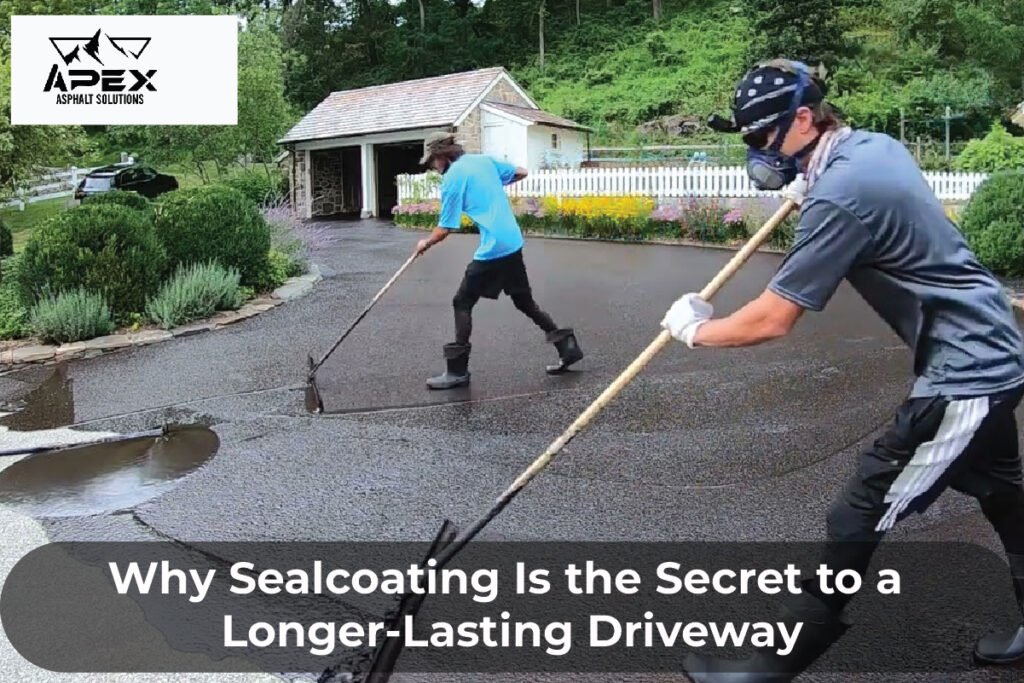
What Is Sealcoating, Really?
Sealcoating is a protective liquid layer applied over asphalt pavement. Once cured, it forms a smooth, dark, water-resistant barrier that shields the asphalt from damaging elements.
It’s essential to understand what sealcoating is and isn’t:
- ✅ It protects asphalt from damage
- ❌ It does not repair structural problems or deep cracks
Think of sealcoating like sunscreen for your driveway. It doesn’t fix existing damage, but it prevents future deterioration by blocking the elements that cause asphalt to fail.
Why Asphalt Driveways Deteriorate Over Time
To understand why sealcoating works so well, you first need to understand what damages asphalt.
Water Infiltration
Water is asphalt’s biggest enemy. Once moisture penetrates the surface, it weakens the foundation underneath. This leads to cracks, potholes, and sinking areas.
UV Rays and Oxidation
Sun exposure dries out the oils in asphalt. Over time, this causes oxidation, making the surface brittle, faded, and prone to cracking.
Oil, Gas, and Chemical Spills
Vehicle fluids slowly break down asphalt binders, softening the surface and creating weak spots.
Temperature Changes
Hot summers and cold winters cause asphalt to expand and contract. Without protection, this movement leads to cracking.
Sealcoating addresses all of these issues.
How Sealcoating Extends the Life of Your Driveway
Here’s where sealcoating truly shines. Each benefit below directly increases your driveway’s lifespan.
1. Prevents Water from Penetrating the Surface
Sealcoating fills tiny pores and surface voids that allow water to seep into asphalt. Once sealed, water runs off instead of soaking in.
Why this matters:
- Prevents base erosion
- Reduces freeze-thaw damage
- Stops cracks from spreading
Keeping water out is the most critical factor in preserving asphalt.
2. Protects Against UV Rays and Oxidation
Over time, sunlight dries out asphalt, stripping away the oils that keep it flexible. Sealcoating creates a protective layer that blocks harmful UV rays.
Benefits include:
- Slower aging process
- Reduced brittleness
- Fewer surface cracks
This alone can add years to your driveway’s lifespan.
3. Shields Against Oil, Gas, and Chemical Damage
Sealcoated surfaces are far less porous than untreated asphalt. This makes them resistant to vehicle fluids and chemical spills.
As a result:
- Oil stains are easier to clean
- Asphalt binders remain intact.
- Soft spots and surface breakdown are reduced.
4. Helps Prevent Cracks and Potholes
While sealcoating won’t repair existing cracks, it dramatically reduces the chances of new ones forming.
By protecting the surface from moisture, UV rays, and temperature stress, sealcoating minimizes the conditions that lead to cracking and potholes.
5. Improves Flexibility in Changing Temperatures
Asphalt needs to flex with temperature changes. Sealcoating helps maintain that flexibility, allowing the surface to expand and contract without cracking as easily.
This is especially important in regions with:
- Hot summers
- Cold winters
- Freeze-thaw cycles
6. Restores Appearance and Boosts Curb Appeal
A fresh sealcoat restores that rich, deep black color, instantly making your driveway look newer and well-maintained.
Beyond looks, this has real benefits:
- Increased curb appeal
- Higher perceived property value
- A driveway that looks “new” instead of neglected
Homeowners are also more likely to keep up with maintenance when their driveway looks great.
7. Saves You Money Over the Long Term
Sealcoating is one of the most cost-effective asphalt maintenance services available.
Consider this:
- Sealcoating costs a fraction of resurfacing
- Prevents expensive crack repairs
- Delays full driveway replacement
Regular sealcoating every few years can save homeowners thousands of dollars over the life of their driveway.
When Should You Sealcoat Your Driveway?
Timing matters.
Best Time to Sealcoat
- Late spring through early fall
- Temperatures consistently above 50°F
- Dry weather with no rain forecast
How Often Should Sealcoating Be Done?
- Typically, every 2–3 years
- High-traffic driveways may need it more often.n
New Driveways
Fresh asphalt should cure for 6–12 months before the first sealcoat application.
Common Sealcoating Myths Homeowners Believe
“Sealcoating fixes cracks.”
No. Cracks must be filled and repaired before sealcoating.
“More sealcoating is always better.”
Over-application can cause peeling, flaking, and trapped moisture.
“DIY sealcoating is just as good.”
Professional sealcoating includes proper surface prep, crack filling, and correct application thickness — all critical for longevity.
What Professional Sealcoating Involves
A professional sealcoating service typically includes:
- Thorough surface cleaning
- Oil stain treatment
- Crack filling and minor repairs.
- Proper edging and masking
- Even sealcoat application
- Adequate curing time
This process ensures the sealcoat bonds correctly and lasts longer.
When Sealcoating Isn’t Enough
Sealcoating works best as preventive maintenance. If your driveway already has:
- Extensive alligator cracking
- Deep potholes
- Severe sinking or base failure
You may need resurfacing or reconstruction before sealcoating can be effective.
Final Thoughts
Sealcoating isn’t just about making your driveway look better — it’s about protecting your investment. By blocking water, sun, chemicals, and temperature stress, sealcoating slows asphalt deterioration and extends the life of your driveway by years.
For homeowners who want fewer repairs, lower costs, and a driveway that lasts as long as possible, sealcoating truly is the secret.
If your driveway is due for maintenance, scheduling professional sealcoating now can save you time, money, and frustration down the road.
FAQs
1. Does sealcoating really extend the life of a driveway?
Yes. Sealcoating protects asphalt from water, UV rays, oxidation, and chemical spills, which are the leading causes of premature driveway failure.
2. How often should homeowners sealcoat their driveway?
Most driveways should be sealcoated every 2–3 years, depending on traffic, climate, and overall asphalt condition.
3. Can sealcoating fix cracks in my driveway?
No. Cracks must be filled appropriately before sealcoating. Sealcoating is a preventive treatment, not a repair solution.
4. When is the best time of year to sealcoat a driveway?
Late spring through early fall is ideal, when temperatures stay above 50°F, and there’s no rain during curing.
5. Is professional sealcoating better than DIY?
Yes. Professional sealcoating includes proper surface preparation, crack repair, correct application thickness, and longer-lasting results.