
Asphalt is durable, but it isn’t invincible. Sunlight, rain, oil spills, traffic, and temperature changes slowly break it down, causing cracks, fading, and potholes. That’s why sealcoating is considered one of the most effective and affordable ways to protect your driveway or parking lot.
Whether you’re a homeowner trying to keep your driveway looking clean and new or a business maintaining a professional commercial property, sealcoating offers significant long-term advantages. Below, we break down the top 10 benefits — based on industry best practices and real-world results — to help you understand precisely why sealcoating is worth it.
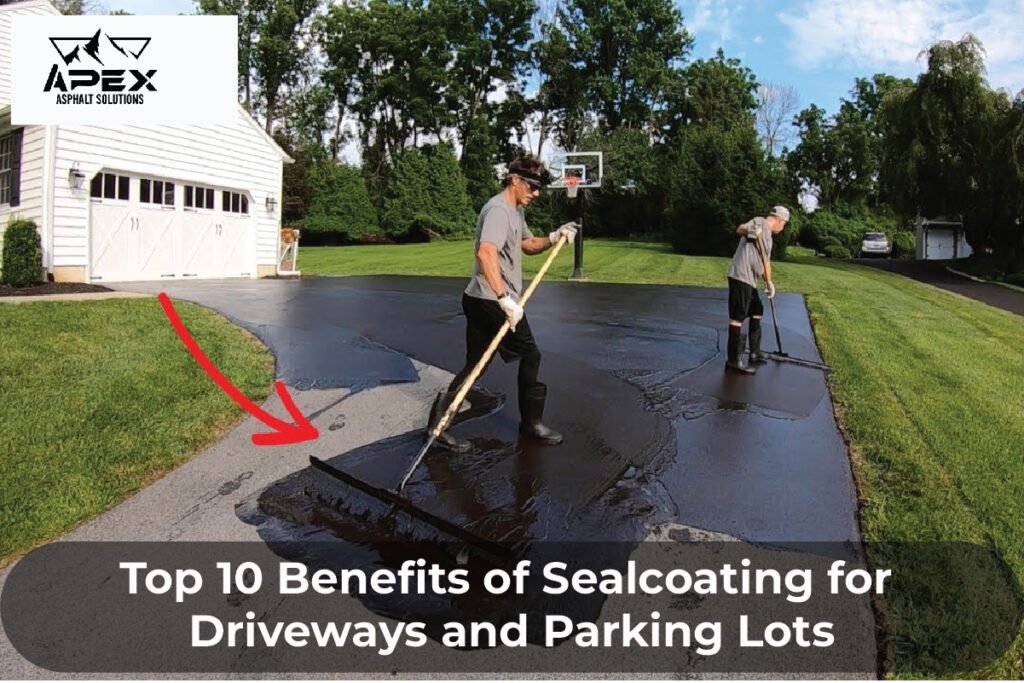
1. Extends the Lifespan of Asphalt
Sealcoating acts like a protective shield over your pavement, preventing early wear and tear. In many cases, a well-maintained asphalt surface can last up to 20–30% longer than untreated pavement.
This means fewer repairs, fewer replacements, and significant long-term savings.
2. Protects Against UV Damage
The sun is one of asphalt’s biggest enemies. UV rays weaken the binder that holds asphalt together, leading to brittleness and cracks.
Sealcoating blocks UV exposure, keeping asphalt flexible, dark, and intense for years.
3. Prevents Water Penetration
Water is the number one cause of asphalt deterioration. Once it seeps into cracks, it freezes in winter, expands, and creates more serious structural damage.
Sealcoating provides a waterproof barrier that keeps moisture out — essential for climates with rain, snow, or freeze-thaw cycles.
4. Shields Against Oil, Gas, and Chemical Spills
Driveways and parking lots often come into contact with:
- Oil drips
- Transmission fluid
- Gasoline
- De-icing chemicals
These substances break down asphalt over time. Sealcoating prevents them from penetrating the surface, making spills much easier to clean.
5. Enhances Curb Appeal
Freshly sealed pavement looks brand new — glossy, smooth, and dark black.
This dramatically improves the appearance of:
- Homes
- Commercial properties
- Apartment complexes
- Retail centers
- HOAs
A better-looking surface can even increase property value.
6. Improves Safety and Traction
Sealcoating creates a uniform surface that reduces loose aggregate and rough patches. This helps:
- Prevent trips and falls
- Improve tire traction
- Reduce dust
- Create better visibility for pavement markings.
Drivers, customers, and pedestrians benefit from a safer, smoother surface.
7. Makes Cleaning and Maintenance Easier
A sealed surface is smoother and less porous, which means:
- Dirt doesn’t settle as easily
- Snow removal is easy.r
- Oil spills sit on top instead of soaking .in
- Pressure washing becomes more effective.
It saves homeowners and property managers a lot of time and hassle.
8. Reduces Long-Term Repair Costs
Sealcoating is one of the most cost-effective protective measures available. A routine sealcoat every 2–3 years prevents expensive repairs such as:
- Crack filling
- Patching
- Resurfacing
- Full asphalt replacement
A small maintenance expense today prevents a large repair bill later.
9. Enhances Line Striping Visibility
For parking lots, sealcoating provides a dark, smooth background that makes striping look brighter and cleaner. This improves:
- Traffic flow
- Parking organization
- Handicap space visibility
- Customer navigation
If you want a professional-looking parking lot, sealcoating is a must.
10. Increases Property Value and Professional Appeal
A well-maintained driveway or parking lot creates a positive first impression. Sealcoating shows that the property is cared for, safe, and appealing.
This matters for:
- Homebuyers
- Tenants
- Retail customers
- Commercial clients
- Visitors
Good pavement upkeep reflects professionalism and pride in your property.
How Often Should You Sealcoat?
Most experts recommend:
- Every 2–3 years for residential driveways
- Every 1–2 years for commercial parking lots (due to heavier traffic)
You should also sealcoat sooner if you notice fading, cracking, or weather damage.
Final Thoughts
Sealcoating isn’t optional — it’s an essential part of asphalt maintenance. For an affordable price, you protect your pavement from the elements, improve its appearance, extend its lifespan, and avoid costly future repairs.
If you want long-lasting asphalt that stays smooth, safe, and attractive, sealcoating is the smartest investment you can make.
FAQs
1. How does sealcoating extend the lifespan of asphalt?
Sealcoating protects asphalt from water, UV rays, chemical spills, and oxidation, preventing cracks and structural damage and significantly extending the pavement’s life.
2. Can sealcoating improve the appearance of my driveway or parking lot?
Yes. A fresh sealcoat restores a deep black color, smooth finish, and uniform look, enhancing curb appeal and property value.
3. How often should I sealcoat my driveway or parking lot?
Residential driveways typically require sealcoating every 2–3 years, while commercial parking lots with heavier traffic should be sealed every 1–2 years.
4. Does sealcoating protect against oil, gas, and chemical spills?
Yes. Sealcoating creates a barrier that prevents fluids like oil, gasoline, and de-icing chemicals from penetrating the asphalt, reducing surface damage.
5. Is sealcoating a cost-effective maintenance solution?
Absolutely. Regular sealcoating prevents expensive repairs, resurfacing, or complete replacement, saving money in the long term.
6. Can sealcoating improve safety on driveways and parking lots?
Yes. Sealcoating smooths minor surface imperfections, reduces loose debris, improves traction, and enhances visibility for line markings, making surfaces safer for vehicles and pedestrians.
7. Does sealcoating prevent cracks and potholes entirely?
No. Sealcoating protects the surface and slows deterioration, but it does not repair existing structural damage. Cracks and potholes must be fixed before applying a sealcoat.
8. What is the best time of year to sealcoat asphalt?
Sealcoating is most effective during warm, dry weather — typically late spring through early fall — to ensure proper curing.
9. Can sealcoating make cleaning and maintenance easier?
Yes. A sealed surface is smoother and less porous, making it easier to remove dirt, debris, snow, and spills.
10. Is sealcoating suitable for both residential and commercial properties?
Yes. Sealcoating provides benefits for both homeowners and businesses, protecting asphalt, improving appearance, and reducing long-term maintenance costs.