
Most property owners don’t realize how much parking space they’re losing simply because lines are faded, misaligned, or poorly planned. A typical lot can waste 10–30% of usable space due to inefficient striping.
Proper line striping isn’t just about aesthetics — it can increase capacity, improve traffic flow, enhance safety, and boost property value. In this guide, we’ll show how strategic striping and layout optimization can help you make the most of every square foot.
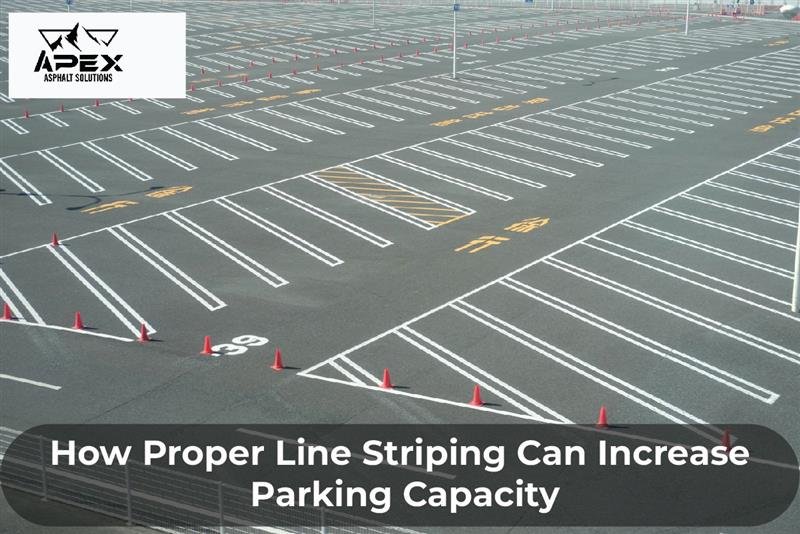
Why Poor Striping Wastes Space
Faded, misaligned, or absent parking lines lead to:
- Uneven parking — cars leaving extra space between vehicles reduces overall capacity.
- Inconsistent stall size — poorly spaced stalls make some areas unusable.
- Inefficient traffic flow — unclear lanes and missing directional arrows create bottlenecks and reduce usable spots.
- Reduced safety — pedestrians and vehicles navigate unpredictably, increasing the risk of accidents.
Without clear striping, your lot is working against you instead of for you.
Basics of Efficient Parking Layout & Striping
- Stall Sizes: Use varied stall widths — compact, standard, and oversized — to maximize space without sacrificing convenience.
- Parking Angles: Angled parking can save space and improve flow for high-turnover areas; perpendicular layouts maximize density for low-turnover areas.
- Aisle Widths & Flow: Narrower aisles can increase stall count, but must balance maneuverability and safety. One-way traffic lanes often improve space efficiency.
- Flexible Zones: Allocate spaces for motorcycles, EV charging, or loading/unloading to optimize usage based on vehicle type and turnover.
How Proper Striping Boosts Capacity and Flow
1. More Parking Spots Without Expanding Your Lot
Re-striping with optimized layouts can often add up to 15–20% more spaces, providing a measurable return on investment.
2. Reduced Wasted Space
Clear, visible lines encourage drivers to park correctly, preventing underutilized areas.
3. Smoother Traffic Flow
Directional arrows and properly aligned lanes minimize congestion, making it easier for cars to enter, park, and exit quickly.
4. Enhanced Safety and Reduced Liability
Proper striping reduces accidents, door dings, and pedestrian conflicts, creating a safer environment for users.
5. Compliance and Accessibility
Clearly marked ADA spaces, fire lanes, and pedestrian zones ensure your lot meets legal requirements and effectively serves all visitors.
6. Professional Appearance
Neat, organized parking reflects positively on your property and business, boosting customer satisfaction and occupancy rates.
Design & Striping Strategies
- Audit Your Vehicle Mix: Include compact or oversized stalls depending on your typical users.
- Select Appropriate Layout: Angled for high-turnover, perpendicular for density, or mixed layouts for flexibility.
- Optimize Lane Widths: Ensure one-way and two-way traffic flows are clear without wasting space.
- Use High-Quality Paint: Reflective, durable paints extend line life and maintain visibility.
- Define Pedestrian & Safety Zones: Crosswalks, fire lanes, and ADA-compliant spaces prevent unsafe or illegal parking.
- Plan Re-striping After Pavement Work: Fresh sealcoating or resurfacing is the perfect opportunity to implement optimized layouts.
Balancing Trade-Offs
- Tighter Stalls vs Maneuverability: Smaller stalls maximize capacity but can make parking tricky.
- Compact Focus vs Larger Vehicles: Include a few oversized stalls for trucks or vans.
- Aisle Width vs Density: Too narrow aisles may violate local codes; clarity and signage are essential.
- Over-Striping Risks: Too many small stalls can cause confusion — strike a balance with intuitive layouts.
Audit & Maintenance Tips
- Regular Inspections: Check line visibility every 12–24 months.
- Prompt Repainting: Faded lines reduce capacity perception and safety.
- Post-Resurfacing Stripe: Repaint after sealcoating or asphalt repairs to maintain layout integrity.
- Monitor Usage Patterns: Adjust stall sizes or layouts as traffic, vehicle types, or business needs change.
Case Study & Real-World Impact
- RPM Pavement reports that smart striping and layout redesigns can increase lot capacity by up to 20% without expanding the footprint.
- A poorly striped lot with faded, irregular lines can gain multiple extra spots simply by re-striping with an optimized layout.
- Strategic use of compact-car stalls, directional lanes, and clear aisle widths maximizes space for high-turnover retail or office complexes.
Conclusion
Proper parking lot line striping is more than an aesthetic upgrade — it’s a strategic investment.
By optimizing stall size, parking angles, lane widths, and traffic flow, you can:
- Increase capacity without expanding your lot.
- Enhance safety for drivers and pedestrians.
- Improve traffic flow and turnover for busy properties.
- Ensure compliance with ADA and fire lane regulations.
- Boost your property’s professional appearance and value.
Don’t let inefficient striping waste valuable space. Schedule a parking-lot audit or professional re-striping today to unlock the full potential of your property.
FAQs
Q: Can line striping really add more parking spaces?
Yes. Optimized layouts, compact stalls, and proper lane design can increase capacity by up to 20%.
Q: What parking layout is best for high-turnover lots?
Angled stalls with one-way lanes often maximize efficiency and speed for busy retail or office lots.
Q: How often should I repaint parking lot lines?
Typically, every 12–24 months, or immediately after sealcoating, resurfacing, or heavy wear.
Q: Do I need professional striping for capacity optimization?
Professional contractors ensure precise layout, regulatory compliance, and durable paint for long-lasting results.
Q: How can I balance more spots with safety?
Include wider aisles in key areas, clearly mark crosswalks, and maintain some oversized stalls for larger vehicles.